
Mittelschule & AHS · 5.–8. SchulstufeMittelschule & AHS-Unterstufe · 5.–8. Schulstufe
Jede Woche die passenden Englisch-Übungen für Ihr Kind – fertig vorbereitet.
Ein Wochenplan für die Schulstufe Ihres Kindes: Arbeitsblätter mit Lösungsblatt, Coaches und Quiz. Sie müssen nichts suchen oder vorbereiten.

Wochenplan
Lernplan für Emma
6. Schulstufe · Diese Woche

Pollys Tipp: Mit dem Grammatik Coach anfangen, dann geht das Arbeitsblatt leichter.
14 Tage alle Pro-Funktionen gratis. Danach geht es kostenlos weiter, es wird nichts abgebucht.
- Ohne Kreditkarte
- In Minuten startklar
- Am österreichischen Lehrplan orientiert
- DSGVO-konform
So läuft eine Woche
Einmal anlegen, jede Woche üben
Schritt 1: Kind anlegen
Sie tragen Vornamen und Schulstufe ein. Ihr Kind braucht keine E-Mail-Adresse und kein eigenes Konto.
Schritt 2: Wochenplan kommt automatisch
Jede Woche stellt Stumble AI zwei bis vier Aufgaben zusammen: Arbeitsblatt mit Lösungsblatt, Coach und Quiz. Die Themen folgen dem Lernpfad der Schulstufe, und erst wenn eines sitzt, kommt das nächste.
Schritt 3: Kind übt, Sie sehen den Fortschritt
Ihr Kind arbeitet die Aufgaben ab und bekommt für eine geschaffte Woche Münzen für kurze Spiele. In Ihrem Dashboard sehen Sie, was erledigt ist und wie das Quiz gelaufen ist.
14 Tage alle Pro-Funktionen gratis. Danach geht es kostenlos weiter, es wird nichts abgebucht.
Das Material
Was Ihr Kind bekommt
Ein Ausschnitt aus einem Beispiel-Arbeitsblatt der 6. Schulstufe zum Past Simple, daneben sein Lösungsblatt.
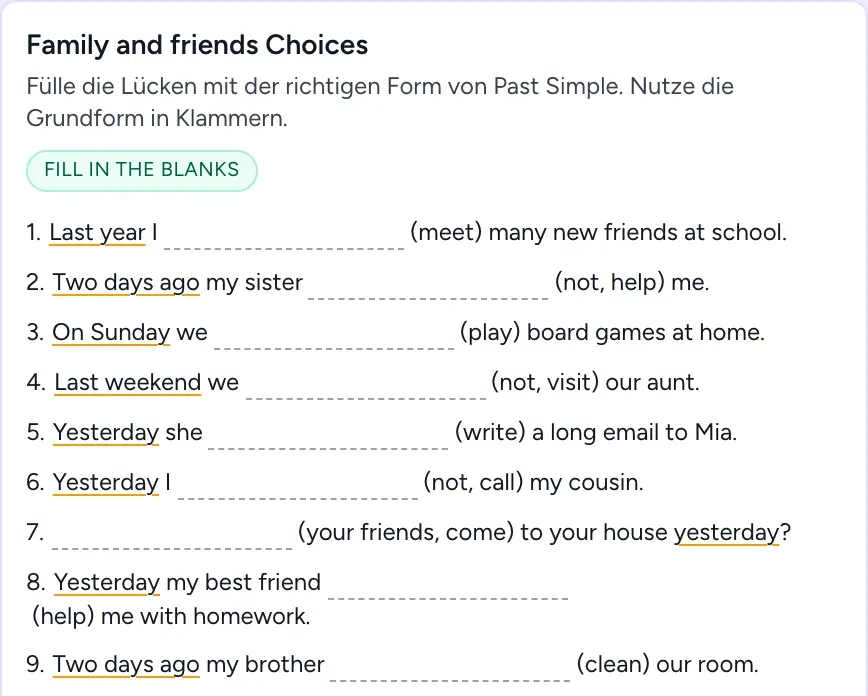
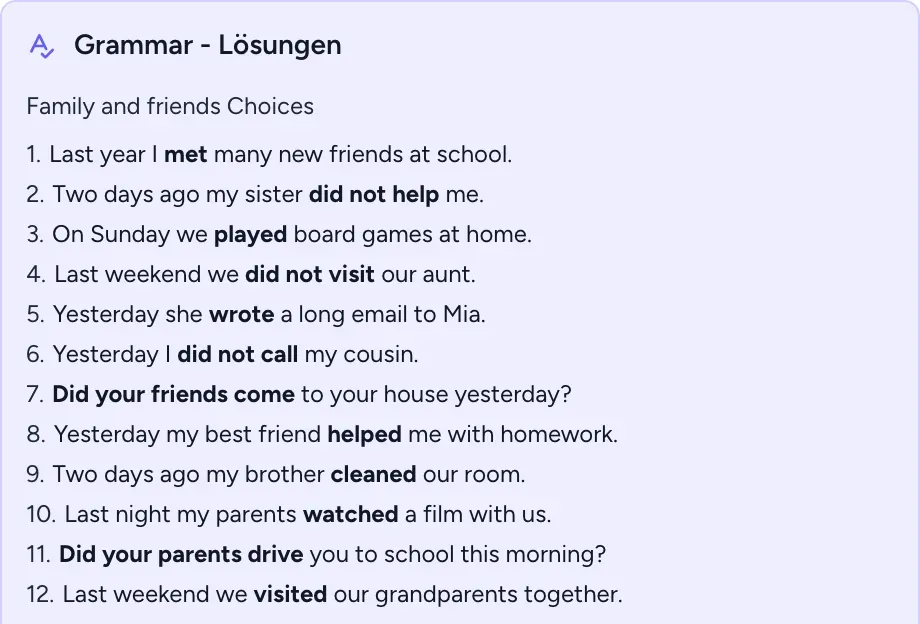
PDF + Lösungsblatt
Jedes Arbeitsblatt gibt es als PDF zum Ausdrucken, mit eigenem Lösungsblatt zum Nachsehen.
Grammatik, Lesen, Hörverstehen Hören ab Starter
Grammatikübungen und Lesetexte passend zur Schulstufe. Ab Starter kommen Hörtexte zum Anhören dazu.
Online lösen am Gerät ab Pro
Ihr Kind füllt das Arbeitsblatt am Tablet oder Laptop aus und sieht gleich, was richtig ist.
Vier Coaches. Einer für jede Hürde.
Der Lernplan entscheidet, welcher Coach diese Woche dran ist. Ihr Kind muss nur anfangen.
Karte umdrehen für ein Beispiel

Grammatik Coach
Erklärt die Regel, übt sie mit kurzen Lückenaufgaben und prüft drei eigene Sätze.
Schritt 1 von 3: Verstehen
Polly erklärt
Past Simple nimmst du für Dinge, die vorbei sind. Signalwörter wie yesterday oder last year zeigen es dir.
Welcher Satz ist richtig?
She has gone to London last year. She went to London last year.Dann Lückensätze zum Üben und drei eigene Sätze, die Polly prüft. In jedem Tarif enthalten.

Writing Coach
Korrigiert englische Texte, zeigt Stärken und gibt Hinweise für den nächsten Versuch.
Selbst verbessern
Last weekend I have went1 to the cinema with my friends.
Zeitform„have went“Wann ist das passiert? Welche Zeitform passt zu „last weekend“?
went selbst gelöst!Ab Starter. Die Lösung zeigt der Coach erst, wenn Ihr Kind sie braucht.

Speaking Coach
Lässt Texte laut vorlesen und gibt Feedback zu Aussprache und Vollständigkeit.
Auswertung nach dem Vorlesen
The weather is beautiful today, so we walk to the park.
AusspracheAusgelassen
Aussprache78
Lesefluss88
Tempo92
Genauigkeit85
Ab Starter. Die Aufnahme wird nach der Auswertung nicht gespeichert.

Quiz
Festigt Grammatik mit kurzen Quiz-Runden, die gut in den Wochenplan passen.
Erklärung nach jeder Antwort
We ___ in Vienna since 2020.
A. live
B. have lived
C. are living
Fast! Lass uns kurz schauen.
„since“ + Zeitpunkt: Es hat früher begonnen und gilt noch. Also Present Perfect.
In jedem Tarif enthalten.
Aus dem Englischunterricht
Gemacht von zwei Englischlehrern
Dominik und David haben Stumble AI aus ihrem Englischunterricht heraus entwickelt.
1.000+
erledigte Lernplan-Aufgaben
7.000+
beantwortete Fragen
1.000+
Coach-Sessions und Arbeitsblätter
„Im Unterricht sehe ich jede Woche, wo es hakt. Zuhause fehlt dann oft die passende Übung, und die Suche kostet Eltern Abende. Stumble AI legt Ihrem Kind genau diese Übung hin.“
 DominikEnglischlehrer und Mitgründer
„Wir wollten kein weiteres Arbeitsblatt-Tool bauen, sondern einen Lernbegleiter, der weiß, was als Nächstes dran ist. Sie müssen nichts planen, Ihr Kind fängt einfach an.“
 DavidEnglischlehrer und Mitgründer
Einfache, transparente Preise
Basic bleibt kostenlos. Starter ist günstiger als eine Nachhilfestunde.
Jedes neue Familienkonto startet mit 14 Tagen Pro – ohne Kreditkarte.
Basic
Ersten Lernplan und KI-Coaches kostenlos testen.
Starter
Wöchentlich passende Übungen ohne Vorbereitung.
Alles aus Basic sowie:
Pro
Für bis zu drei Kinder, mit Online-Lösen und KI-Insights.
Alles aus Starter sowie:
Häufig gestellte Fragen
Alles, was Sie über Stumble AI und den Lernalltag Ihres Kindes wissen müssen.
Wie viel Zeit braucht mein Kind pro Woche?
Ein Wochenplan hat zwei bis vier Aufgaben, je nach Thema und danach, wie viel Ihr Kind zuletzt geschafft hat. Jede Aufgabe ist ein Arbeitsblatt, eine Runde mit einem Coach oder ein Quiz. Bei Themen wie If-clauses oder der Steigerung von Adjektiven sind es immer drei: Grammatik Coach, Arbeitsblatt, Quiz. Sonst beginnt die erste Woche mit zwei Aufgaben, mit erledigten Aufgaben werden es drei oder vier, und nach einer Woche ohne erledigte Aufgabe wird der nächste Plan wieder kürzer. Wann in der Woche Ihr Kind übt, bestimmen Sie.
Braucht mein Kind ein eigenes Gerät oder Konto?
Nein. Sie legen in Ihrem Konto ein Kinderprofil an, Ihr Kind braucht weder E-Mail-Adresse noch eigenes Konto. Arbeitsblätter drucken Sie als PDF aus, die Coaches laufen im Browser auf Ihrem Gerät. Ab Pro bekommt Ihr Kind auf Wunsch einen eigenen Zugangscode und öffnet seinen Lernplan auf einem eigenen Tablet oder Laptop.
Kann die KI Fehler machen? Wer prüft die Aufgaben?
Ja, eine KI kann sich irren. Deshalb prüft Stumble AI jede Grammatikaufgabe nach dem Erstellen automatisch, zum Beispiel ob genau eine Antwort passt, und lässt abgelehnte Aufgaben neu schreiben, bevor sie auf das Arbeitsblatt kommen. Ganz ausschließen lässt sich ein Fehler trotzdem nicht. Zu jedem Arbeitsblatt gibt es ein Lösungsblatt zum Nachsehen, und wenn Ihnen eine Aufgabe falsch vorkommt, schreiben Sie uns: Wir sind selbst Englischlehrer und sehen uns jede Meldung an.
Hilft Stumble AI bei Schularbeiten?
Stumble AI übt Woche für Woche den Stoff, der in Englisch-Schularbeiten vorkommt: die Grammatikthemen der Schulstufe, Leseverstehen und ab Starter Hörverstehen, mit Wiederholung bereits geübter Themen. Steht eine Schularbeit zu einem bestimmten Thema an, erstellen Sie zusätzlich ein Arbeitsblatt genau dazu. Eine bestimmte Note können wir nicht versprechen.
Was kostet Stumble AI nach den 14 Tagen?
Nichts, solange Sie kein Abo abschließen. Jedes neue Familienkonto hat die ersten 14 Tage alle Pro-Funktionen, ohne Angabe von Zahlungsdaten. Danach läuft es automatisch im kostenlosen Tarif Basic weiter (3 Arbeitsblätter und 5 Coach-Sessions pro Monat), es wird nichts abgebucht. Wer mehr möchte: Starter kostet €4,90 pro Monat oder €49,00 pro Jahr, Pro €7,90 oder €79,00, Max €14,90 oder €149,00. Ein Monatsabo können Sie jederzeit zum Ende des laufenden Monats kündigen, ein Jahresabo zum Ende des bezahlten Jahres.
Alle Tarife vergleichenGibt es Pro auch ohne Abo?
Ja. Mit Pro Lifetime zahlen Sie einmalig €159,00 und nutzen alle Pro-Funktionen ohne Abo und ohne Ablaufdatum: 100 Arbeitsblätter und 100 Coach-Sessions pro Monat für bis zu 3 Kinderprofile. Es verlängert sich nichts und Sie müssen nichts kündigen. Haben Sie bereits ein Starter- oder Pro-Abo, verlängert es sich nicht mehr und endet mit der bezahlten Periode; ist eine Zahlung offen, endet es sofort. Eine anteilige Erstattung gibt es nicht.
Für welche Schulstufen ist Stumble AI gedacht?
Für die 5.–8. Schulstufe (1.–4. Klasse MS/AHS), also für Kinder von etwa 10 bis 14 Jahren; in Deutschland sind das die Klassen 5 bis 8. Die Themen sind am österreichischen Lehrplan orientiert. Arbeitsblätter, Coaches und Quiz richten sich nach der Schulstufe und dem Schwierigkeitsgrad, die Sie für Ihr Kind wählen.
Was passiert mit den Daten meines Kindes?
Konto, Kinderprofil und Lernstand werden auf EU-Servern in Frankfurt gespeichert. Für Arbeitsblätter, Quiz und die Rückmeldungen der Coaches nutzen wir die KI von OpenAI in den USA. Dorthin gehen je nach Funktion Thema, Schulstufe und Schwierigkeit sowie die Eingaben Ihres Kindes, etwa Antworten in Arbeitsblättern und Quiz, Sätze im Grammatik Coach, Texte im Writing Coach und die Sprachaufnahme beim Speaking Coach. Namen und E-Mail-Adressen schicken wir nicht mit, außer Ihr Kind schreibt sie selbst in einen Text. Die Sätze aus dem Grammatik Coach, die Texte aus dem Writing Coach und die Sprachaufnahmen speichern wir nicht; bei uns bleiben nur Rückmeldung und Ergebnis. OpenAI kann Anfragen bis zu 30 Tage zur Missbrauchskontrolle protokollieren. Alle Details stehen in der Datenschutzerklärung.
Zur DatenschutzerklärungWelche Coaches gibt es?
Vier. Der Grammatik Coach erklärt eine Regel, übt sie mit kurzen Lückenaufgaben und prüft drei eigene Sätze. Das Quiz wiederholt Grammatik in kurzen Fragerunden. Beide sind in jedem Tarif enthalten, im kostenlosen Tarif mit 5 Coach-Sessions pro Monat. Ab Starter kommen der Writing Coach dazu, der englische Texte korrigiert, und der Speaking Coach, der Feedback zu Aussprache und Vollständigkeit gibt, wenn Ihr Kind einen Text vorliest.


Persönliche Hilfe
Keine Chat-Bots, sondern echte Menschen. Wir helfen Ihnen gerne persönlich weiter unter office@stumble-ai.at.
Bereit, die Englisch-Vorbereitung abzugeben?
Kind anlegen, Schulstufe wählen, und der erste Wochenplan mit Arbeitsblatt, Coach und Quiz steht bereit.
Jetzt kostenlos starten14 Tage alle Pro-Funktionen gratis. Danach geht es kostenlos weiter, es wird nichts abgebucht.
- Ohne Kreditkarte
- In Minuten startklar
- Am österreichischen Lehrplan orientiert
- DSGVO-konform